Sixteen billion bottles a year. Three per cent come back. MlimaLoop is the infrastructure that closes the gap, and the people paid, by name, to close it.
East Africa generates millions of tonnes of plastic waste a year and almost none of it comes back. It chokes waterways, cities and soil, while the world's brands are paying a premium for exactly this material, certified and traceable.
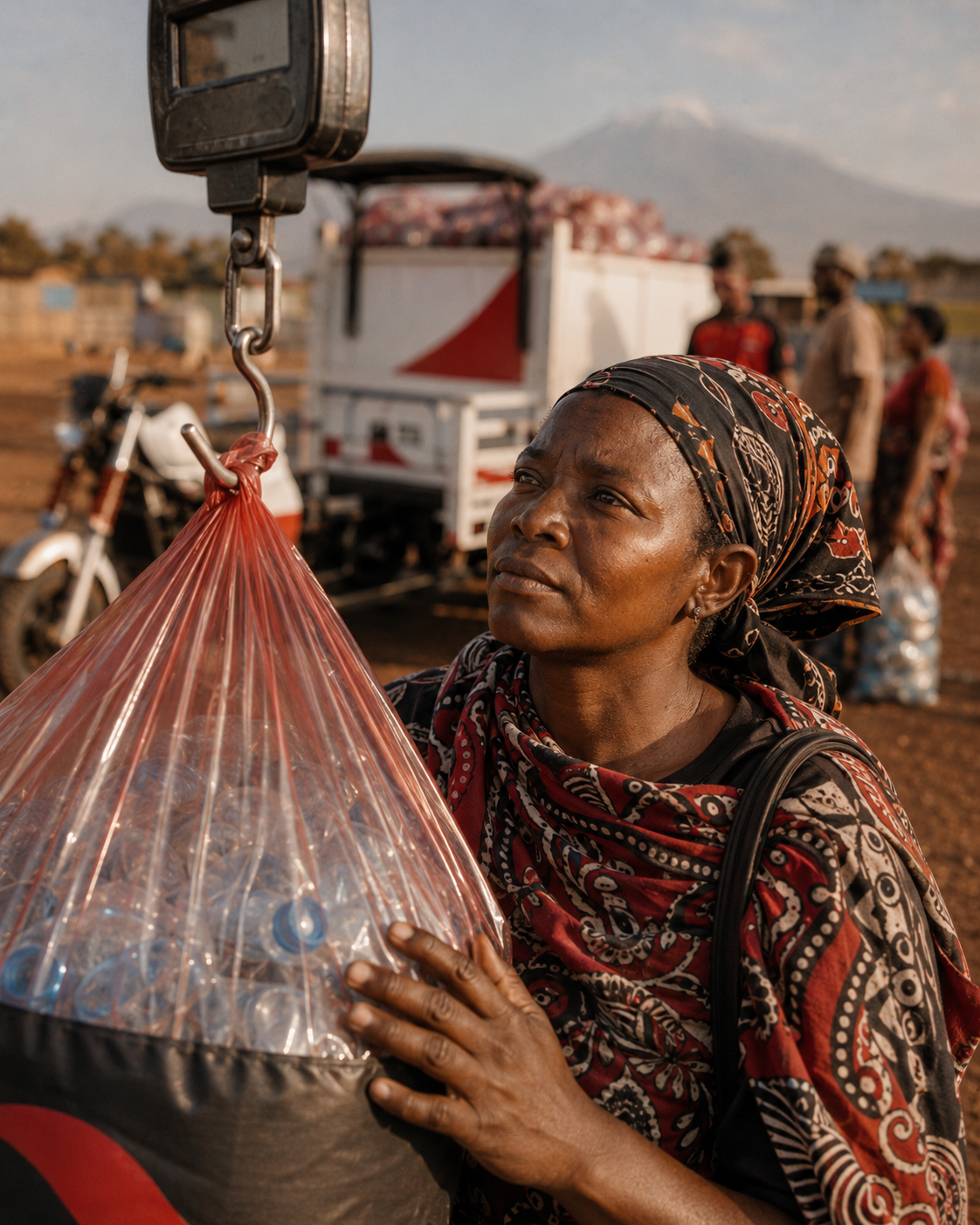
A collector picks a bottle off a roadside in Arusha, scans it into the app, drops it at a mobile buying station, and is paid on the spot. Every time. No middleman, no waiting, no discretion.
$0.165 / kg, paid instantly through the app to mobile money.
A dedicated collector earns around $210 a month, roughly three times Tanzania's minimum wage.
Every kilo GPS-stamped and named: the chain of custody that unlocks premium ocean-bound plastic credits.

LOOP is the street-facing brand collectors actually use. Every weigh-in lands once and is read three ways, as a collector's earnings, a depot officer's queue and batch, and an investor's provenance trail. Same data, same ground, different density.
Paid to M-Pesa at the scale. Red is what you collected, blue is what your team collected.

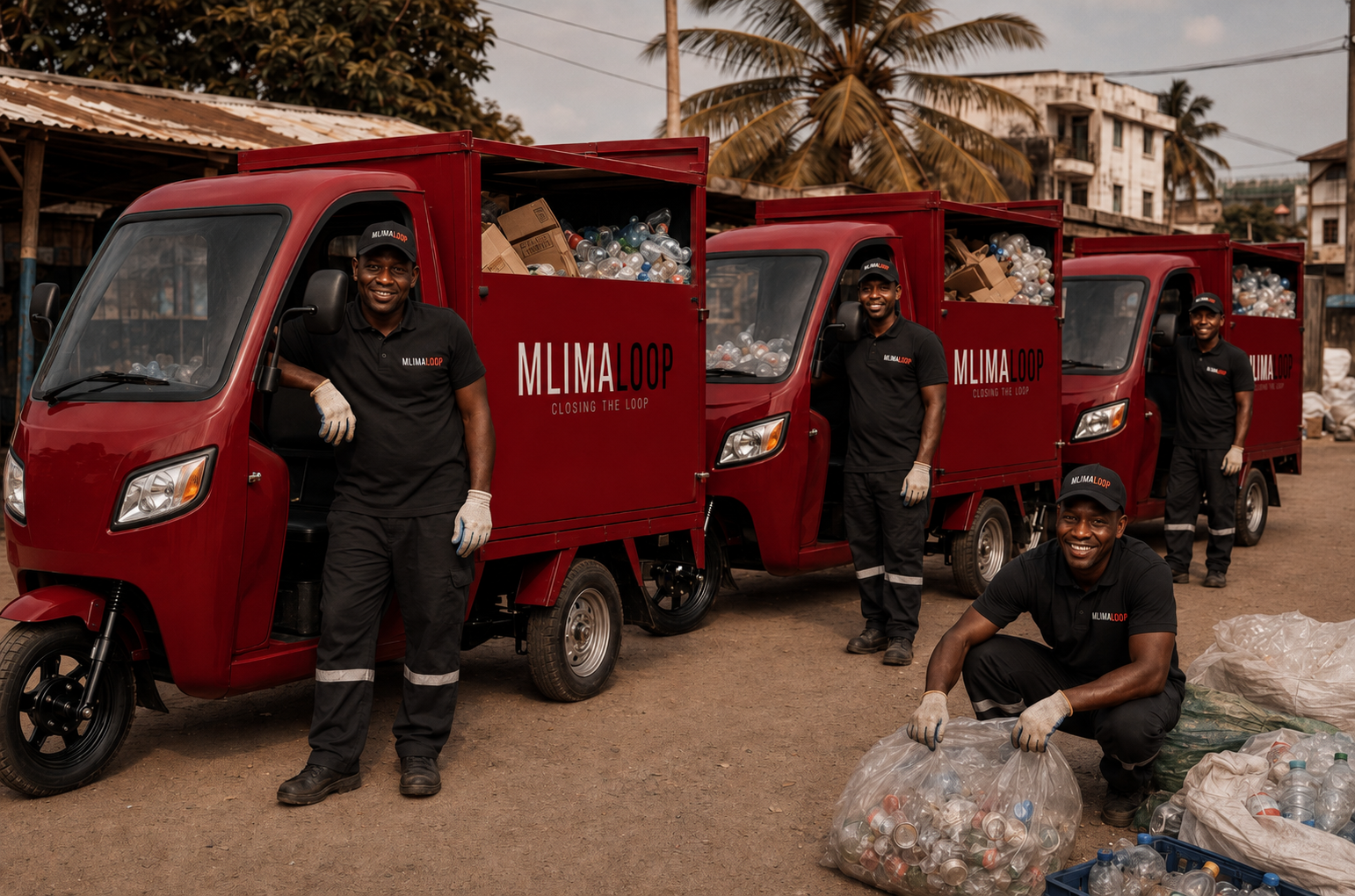
Five vehicles run scheduled mobile buying stations today, so collectors never travel far, scaling toward a fleet of 120 as sites roll out. At every visit they sell a basket of materials, PET, HDPE, aluminium and cardboard, at published, honest prices.
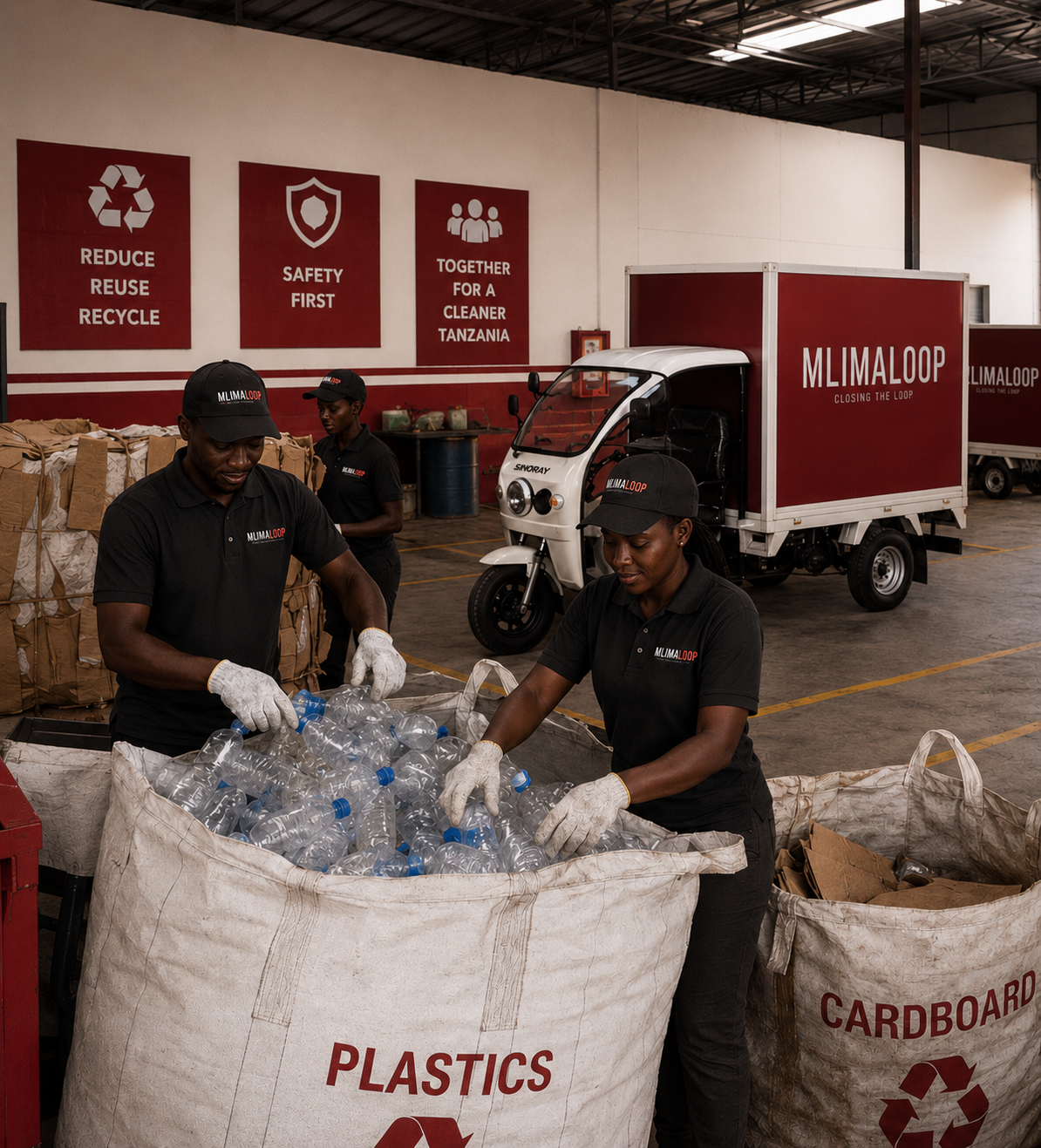
Because feedstock stockpiles during build-out, the plant runs two shifts from day one, around seven to eight tonnes processed daily. Six stages, fully traceable, through to a food-grade reactor and a pilot yarn line.
Named collectors, app-logged, sorted by resin and colour.
Granulated and friction-washed; caps float off for PP recovery.
Caustic hot-wash to food-contact cleanliness; water recycled.
Twin-screw extrusion into uniform, sellable rPET pellet.
Solid-state upgrade to food-grade IV.
Sample yarn for brand qualification and the textile route.
Non-food pellet sells immediately. Food-grade follows once certified, commanding premium, long-term offtake from beverage and FMCG brands.
The bottle becomes food-grade pellet and recycled fibre. What cannot be recycled becomes something else entirely, and the value keeps circulating in the community that collected it.
Food-grade pellet and yarn for global brands.
Jerricans and containers as a second product line.
Non-recyclable plastic plus sand, pressed into interlocking bricks.
Recycled composite sheets that outlast corrugated iron.
MlimaLoop is not a plant with a community programme bolted on. The community is the business, its collectors, its operators, its pride. As the network grows, so do the people and the cities around it.

The waste becomes the bricks. The bricks become the homes. The homes keep the collectors who brought the waste in.
One proven model, rolled out city by city. Arusha is the blueprint; every site after it is a copy of a system that already works, reaching twelve operating sites across Tanzania.
After Arusha is proven, each new site is paid for out of cash flow. The placement funds the build and accelerates the roll-out; the model does the rest.
Base case, USD, from the full financial model. Projections, not guarantees.
The collection network, the app and the licences are built and paid for, and feedstock is stockpiling on site. This private placement, not a loan note and not equity, funds the Arusha plant and accelerates the national roll-out, structured to pay a fixed return over three years, then hand the decision back to you.
Thirty per cent over three years, plus your capital back or a stake in the business, secured against the feedstock surplus and the machinery.
Every bottle is a resource. Every loop closed is a profit and a livelihood. If you are serious about the circular economy in Africa, build it with us.